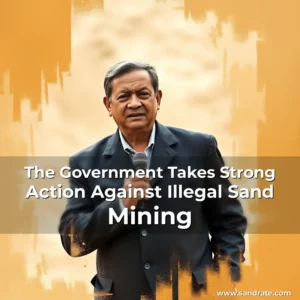
The Hidden Crisis Beneath Our Feet: Understanding the Global Impacts of Sand Mining

The Hidden Crisis Beneath Our Feet: Understanding the Global Impacts of Sand Mining
Sand mining is an invisible force shaping our modern world, quietly fueling construction booms and technological advancements while leaving deep scars across landscapes and ecosystems. From skyscrapers rising in cities to smartphones in our pockets, every grain of sand tells a story of extraction, consumption, and environmental consequence.
This critical examination dives beneath the surface of sand mining’s global significance, exploring its economic drivers, ecological consequences, regulatory challenges, and potential solutions for sustainable resource management.
The Invisible Engine Powering Modern Civilization
Silica sand, river sand, and crushed stone form the foundation of modern infrastructure. Every year, over 50 billion tons of sand are extracted worldwide, creating enough material to build a wall 26 feet high around the Earth’s equator.
This demand has skyrocketed as urbanization accelerates. The World Bank estimates that by 2050, we’ll need 80% more building materials than today, driven primarily by Asia’s rapid development and population growth.
In India alone, sand mining contributes $45 billion annually to the economy through construction projects, road networks, and housing developments. However, this economic benefit comes at significant environmental costs.
Concrete production accounts for 8% of global carbon emissions, making sand a crucial component in the climate change equation. The cement industry requires vast quantities of fine aggregate to create the binding agent that holds structures together.
Technological innovation has also increased sand demand. Semiconductor manufacturing relies on ultra-pure silica sand, with each smartphone containing approximately 15 grams of silicon derived from mined quartz.
- Economic Impact: Supports millions of jobs globally, particularly in developing nations where sand mining often provides livelihoods for local communities.
- Infrastructure Growth: Enables massive megaprojects such as China’s Belt and Road Initiative, which requires enormous amounts of construction-grade sand.
- Resource Depletion: Unsustainable extraction rates threaten future availability, with some sources predicting that global sand reserves may be depleted within decades at current consumption levels.
The Environmental Toll of Sand Extraction
Excessive sand removal disrupts delicate ecological balances, causing irreversible damage to aquatic habitats and coastal environments. In many regions, sand mining operations have led to severe erosion problems affecting both natural shorelines and human settlements.
Riverbed mining, responsible for nearly half of global sand extractions, alters water flow patterns and destroys fish breeding grounds. This practice has been linked to declining fish populations in rivers across Southeast Asia and Africa.
A study published in Nature Geoscience found that between 1998 and 2015, sand mining caused a 40% reduction in sediment transport along the Ganges-Brahmaputra-Meghna river system, impacting delta formation processes essential for agriculture.
Biodiversity loss becomes evident when wetland areas are drained for gravel extraction. These ecosystems serve as nurseries for countless species, including commercially important fish stocks that sustain regional food security.
Coastal sand mining exacerbates vulnerability to storm surges and sea-level rise. Areas like Jakarta, Indonesia have experienced accelerated land subsidence due to excessive groundwater pumping combined with beach nourishment projects using dredged sands.
- Habitat Destruction: Removes protective layers that buffer against floods and storms, increasing disaster risks for vulnerable populations.
- Water Pollution: Sediment plumes from mining operations can smother coral reefs and seagrass beds, reducing marine biodiversity by up to 40% in affected zones.
- Climate Feedback Loop: Degrading mangrove forests for sand extraction releases stored carbon, contributing to atmospheric CO2 concentrations and worsening climate impacts.
Global Perspectives on Sand Mining Regulation
Different countries approach sand mining regulation with varying degrees of stringency based on their economic priorities and environmental awareness. Some nations implement strict licensing requirements while others struggle with enforcement challenges.
India’s National River Conservation Plan mandates permits for riverbed mining but faces implementation issues due to corruption and lack of monitoring technology. In contrast, Singapore enforces stringent regulations requiring environmental impact assessments before any sand extraction project commences.
The European Union has established harmonized standards under the Water Framework Directive, aiming to protect inland waters from unsustainable exploitation. Member states must ensure that sand extraction does not compromise water quality or ecosystem health.
Regulatory frameworks often lag behind the pace of industrial expansion. A 2022 report by the United Nations Environment Programme highlighted that less than 20% of global sand resources are subject to formal governance mechanisms.
Community-based management models show promise in certain contexts. In Thailand, local fishing cooperatives have successfully lobbied for restrictions on beach sand mining after witnessing declines in seafood harvests.
- Licensing Systems: Effective systems require transparent application processes, independent oversight, and public participation in decision-making.
- Technology Integration: Remote sensing and GIS mapping help track illegal activities and monitor compliance with spatial planning guidelines.
- International Cooperation: Transboundary water agreements become necessary when sand extraction affects shared river basins or coastal zones.
Alternatives and Sustainable Solutions
Innovative approaches are emerging to reduce reliance on primary sand sources while maintaining construction needs. Recycled concrete aggregates offer promising alternatives to virgin materials in infrastructure projects.
Japan leads in waste-to-resource initiatives, reprocessing demolition debris into new construction materials. Their recycling rate exceeds 80%, significantly lowering pressure on natural sand deposits.
Countries like Australia and Canada are investing in artificial sand production technologies that mimic natural weathering processes. These methods produce high-quality aggregates without depleting geological formations.
Architectural innovations also contribute to sustainability efforts. Self-compacting concrete formulations reduce the need for fine aggregates, enabling lower overall material consumption during construction phases.
Urban planning strategies emphasize brownfield redevelopment rather than expanding into untouched territories. This approach minimizes habitat disruption while meeting growing space demands efficiently.
- Material Innovation: Research into alternative binders such as geopolymers could replace traditional Portland cement entirely in some applications.
- Policy Reforms: Governments should incentivize circular economy practices through tax breaks for companies adopting closed-loop manufacturing systems.
- Public Awareness Campaigns: Educating consumers about product lifecycles encourages more sustainable choices that indirectly influence sand consumption trends.
The Human Dimension of Sand Mining
Beyond environmental concerns, sand mining profoundly impacts local communities who depend on these ecosystems for survival. Displacement occurs frequently when mining operations encroach upon ancestral lands or destroy vital agricultural terrains.
In Nigeria’s Niger Delta region, artisanal miners face hazardous working conditions with limited safety protections. Many operate without formal contracts, exposing them to respiratory illnesses from prolonged dust exposure.
Women and children constitute a significant portion of informal sector workers involved in sand harvesting. They often bear the brunt of physical labor while receiving minimal compensation compared to male counterparts in organized industries.
Mining conflicts sometimes escalate into violence as communities resist encroachment onto sacred sites or fertile farmlands. Legal battles over land rights typically favor corporate interests over indigenous claims.
Economic disparities widen as profits from sand extraction rarely trickle down to local populations. Instead, multinational corporations reap most benefits while host communities shoulder environmental degradation costs.
- Labor Rights Violations: Forced labor cases have been documented in several Asian countries where migrant workers endure exploitative wage practices.
- Health Risks: Chronic inhalation of silica dust increases susceptibility to silicosis, a debilitating lung disease affecting thousands of miners annually.
- Displacement Crises: Entire villages have been relocated due to dam construction projects that rely heavily on sand dredging operations.
Futuristic Visions for Responsible Resource Management
Emerging technologies hold transformative potential for achieving sustainable sand utilization. 3D printing techniques enable precise material usage, minimizing excess consumption in construction sectors.
Nanotechnology advances suggest possibilities for synthetic sand substitutes that replicate natural properties without environmental harm. Researchers are experimenting with microsphere composites for structural applications.
Blockchain platforms provide transparency in supply chains, allowing stakeholders to trace sand origins and verify compliance with ethical sourcing standards.
Smart sensors embedded in riverbanks detect unauthorized extraction activities in real-time, enabling prompt intervention by regulatory authorities.
Data analytics tools predict depletion timelines accurately, helping policymakers make informed decisions regarding resource allocation and conservation measures.
- Artificial Intelligence: Machine learning algorithms analyze satellite imagery to identify illicit mining sites previously undetectable through conventional surveillance methods.
- Green Chemistry: Developing biodegradable adhesives might eventually eliminate the need for traditional sand-based compounds altogether.
- Renewable Energy Synergy: Solar-powered desalination plants coupled with sand filtration systems demonstrate integrated solutions for coastal communities facing scarcity issues.
Conclusion
The sand mining crisis reveals complex interdependencies between economic progress, environmental preservation, and social equity. As demand continues to outpace replenishment rates, finding balanced solutions becomes increasingly urgent.
Action is required now at multiple levels – governments must strengthen regulations, industries should invest in sustainable alternatives, and individuals can support eco-conscious products that minimize sand footprint. Only through collective effort will we secure a viable future for generations yet unborn.
“`

news is a contributor at SandRate. We are committed to providing well-researched, accurate, and valuable content to our readers.