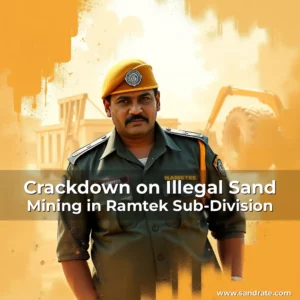
Advanced Sand Mining Techniques and Methods
The Hidden Cost of Shifting Sands: Unveiling the Environmental and Economic Impacts of Global Sand Mining
Sand mining has quietly become one of the most pressing environmental challenges of our time, yet its consequences remain largely underreported. This critical resource, essential for construction, manufacturing, and even technology production, is being extracted at alarming rates worldwide.
The scale of modern sand extraction operations rivals that of oil drilling, but unlike fossil fuels, sand depletion often goes unnoticed until ecosystems are irreparably damaged. From coastal regions to riverbeds, the demand for sand continues to rise as urbanization accelerates globally.
The Invisible Crisis Beneath Our Feet
Beneath the surface of our cities lie the foundations of civilization itself—sand. Every skyscraper, road, and home relies on this seemingly abundant material, which constitutes over 90% of global construction materials by volume.
However, what many fail to recognize is that natural sand formation processes take thousands of years to replenish supplies. In contrast, human consumption now exceeds sustainable levels by an estimated fivefold annually, creating a dangerous imbalance in Earth’s geological systems.
Consider these staggering numbers from recent studies: approximately 50 billion tons of sand are mined each year worldwide, equivalent to extracting the entire contents of Lake Michigan every four months. This figure surpasses the combined annual output of all other mineral resources combined.
The primary drivers behind this relentless demand include rapid infrastructure development in emerging economies, particularly in Asia, where countries like China and India have experienced unprecedented urban expansion. These nations account for nearly half of the world’s current sand consumption due to their massive construction projects.
Additionally, the growing popularity of concrete as the preferred building material has exacerbated the situation. Concrete requires roughly seven times more sand than traditional stone masonry techniques, further intensifying the pressure on already strained reserves.
While some argue that industrial sand alternatives could mitigate this crisis, such solutions face significant hurdles. Crushed gravel and manufactured aggregates require substantial energy inputs and often produce inferior quality results compared to naturally occurring sands used in high-performance applications.
Ecosystem Disruption and Biodiversity Loss
The ecological ramifications of sand mining extend far beyond mere resource depletion. Coastal areas suffer severe habitat degradation when beach sands are removed for commercial purposes, destroying nesting grounds for endangered species like sea turtles and shorebirds.
Riverine environments experience equally devastating effects. Dredging operations along waterways disrupt aquatic habitats, leading to declines in fish populations that support both local fisheries and broader food chains. For example, the Mekong River basin has witnessed dramatic reductions in sediment flow following extensive sand mining activities.
One particularly concerning consequence occurs when sand removal alters hydrological patterns. Changes in riverbed elevation can lead to increased flooding risks downstream while simultaneously reducing groundwater recharge capabilities upstream, affecting millions who depend on these water sources.
Inland desertification also emerges as a long-term threat. When sand extraction removes protective layers from arid landscapes, exposed soils become vulnerable to wind erosion, accelerating land degradation and threatening agricultural productivity in affected regions.
Marine life suffers profoundly from offshore sand mining practices. Extracting seabed sediments disturbs delicate coral reef structures and displaces marine organisms reliant on stable substrates for survival. Studies indicate that such disturbances reduce biodiversity indices by up to 60% within impacted zones.
Freshwater ecosystems bear particular vulnerability since rivers serve as crucial corridors connecting different biomes. By disrupting sediment transport mechanisms, sand mining impairs nutrient cycling processes vital for maintaining healthy aquatic communities across vast geographic ranges.
Case Study: The Collapse of the Indus River Basin
The Indus River system provides a stark illustration of how unregulated sand mining can destabilize entire watersheds. Over decades, excessive extraction has led to channel narrowing, reduced floodplain connectivity, and altered sediment distribution patterns throughout Pakistan and northern India.
Data collected from satellite imagery reveals that certain stretches of the Indus River have lost nearly 80% of their original width since the early 20th century. Such drastic changes compromise the river’s ability to sustain riparian vegetation, which acts as a buffer against extreme weather events.
Local farmers report declining crop yields attributed to decreased soil fertility resulting from diminished sediment deposition. Without adequate nutrients transported through fluvial processes, agricultural lands gradually lose viability, forcing rural communities toward unsustainable livelihood options.
Furthermore, the loss of wetlands associated with river meandering reduces carbon sequestration capacity in the region. Scientists estimate that degraded wetlands contribute significantly higher greenhouse gas emissions compared to intact counterparts, compounding climate change impacts locally.
This case study underscores the interconnectedness of environmental factors and highlights the need for integrated management strategies addressing both immediate economic demands and long-term ecological sustainability goals.
Economic Ramifications and Market Dynamics
Despite its environmental costs, sand remains a cornerstone of global trade networks worth billions annually. The international market for construction-grade sand exceeded $18 billion in 2022 alone, reflecting its indispensable role in modern infrastructure development.
Regional disparities exist in both supply availability and price volatility. Countries rich in quarried sand deposits benefit economically while those lacking sufficient domestic reserves often import costly alternatives or invest heavily in synthetic aggregate production facilities.
Price fluctuations pose additional challenges for developers seeking predictable budget projections. Sudden spikes in sand prices can delay construction timelines or necessitate alternative engineering approaches that may not always align with project specifications.
Illegal sand mining operations represent another layer of complexity within this industry. Black-market traders circumvent regulations by extracting sand without permits, undermining legitimate businesses and fueling corruption in jurisdictions with weak enforcement mechanisms.
Such illicit activities not only deplete finite resources faster but also deprive governments of potential revenue streams that could fund conservation initiatives or public works programs benefiting wider populations.
Social Equity Concerns and Community Impact
Communities residing near active sand mines frequently encounter disproportionate hardships stemming from environmental degradation and displacement pressures. Indigenous groups living alongside river systems often find themselves caught between ancestral rights claims and corporate interests pursuing extractive ventures.
Displacement becomes inevitable when mine sites expand into inhabited territories. Affected residents typically receive minimal compensation, if any, despite losing homes, farms, and cultural heritage tied to specific locations. Relocation efforts rarely account for socioeconomic reintegration needs adequately.
Health implications arise from prolonged exposure to dust generated during sand processing stages. Respiratory issues among workers and nearby inhabitants increase substantially due to fine particulate matter inhalation, contributing to chronic illnesses requiring ongoing medical treatment.
Agricultural communities dependent on fertile soils adjacent to extraction zones witness gradual land degradation. As topsoil erodes away or gets contaminated by runoff from mining operations, farming becomes increasingly difficult, pushing families toward subsistence-level existence or migration to urban centers.
Women disproportionately shoulder caregiving responsibilities amidst these crises, facing compounded burdens as they navigate disrupted household dynamics caused by male labor force participation shifts or family dislocation scenarios arising from sudden relocation orders.
Tech Innovations and Sustainable Alternatives
In response to escalating concerns over conventional sand mining methods, researchers have begun exploring innovative substitutes capable of reducing dependency on natural sources. One promising avenue involves utilizing recycled materials from demolition waste streams to create new construction products.
Concrete manufacturers experimenting with fly ash—a byproduct of coal combustion—have demonstrated encouraging results regarding structural integrity improvements and reduced environmental footprints associated with raw material sourcing phases.
Other advancements include bio-based composites derived from plant fibers reinforced with natural resins. These eco-friendly alternatives show promise for low-rise residential buildings where aesthetics play less critical roles compared to high-strength requirements typical of skyscrapers.
Precast panels made entirely from crushed glass offer another viable option suitable for interior finishes or non-load-bearing walls. Their aesthetic appeal coupled with enhanced fire resistance characteristics makes them attractive choices for architects prioritizing green design principles.
Meanwhile, engineers continue refining geopolymer cement formulations that eliminate reliance on silica-rich sands altogether. Early tests suggest these compounds exhibit comparable durability metrics while drastically lowering embodied energy values traditionally linked to standard Portland cement production cycles.
Adoption barriers persist however; regulatory frameworks often lag behind technological progress, hindering widespread implementation of these novel solutions before comprehensive safety standards get established. Moreover, retrofitting existing infrastructure to accommodate new materials presents logistical complexities requiring careful planning and coordination across multiple stakeholders involved.
Governance Challenges and Policy Solutions
Effective regulation represents perhaps the most formidable hurdle confronting sand mining reform efforts globally. Many national legislatures lack updated statutes specifically tailored to address contemporary extraction practices impacting diverse ecosystems uniquely sensitive to disturbance levels inherent in mechanized operations.
Countries adopting proactive stances have implemented licensing systems mandating periodic audits of operational compliance with prescribed environmental benchmarks. Regular monitoring ensures adherence to set limits concerning permissible drawdown volumes avoiding irreversible damage thresholds identified through scientific assessments.
International cooperation plays a pivotal role in mitigating transboundary conflicts arising from shared watershed usage agreements governing cross-border river basins prone to illegal sand diversion incidents. Bilateral treaties establishing joint oversight committees help prevent jurisdictional ambiguities fostering illicit activity proliferation.
Digital technologies enable real-time tracking capabilities allowing authorities traceable data trails documenting legal versus unauthorized extractions instantaneously. Integration of GPS-enabled sensors embedded within excavation equipment facilitates automated reporting functions minimizing administrative overheads typically associated with manual inspection regimes.
Public awareness campaigns aimed at educating citizens about sustainable consumption habits foster grassroots movements advocating responsible usage norms influencing policy decisions favoring environmentally conscious procurement policies within municipal purchasing contracts specifying preference criteria towards certified responsibly sourced materials whenever feasible.
Moreover, implementing financial incentives through tax credits or subsidies encourages private sector investment into R&D focused on developing next-generation construction materials offering superior performance attributes relative to conventionally obtained sands currently dominating mainstream markets.
Moving Forward: A Call for Collective Action
The future trajectory of sand mining depends critically upon collaborative action spanning governmental bodies, academic institutions, business enterprises, and civil society organizations committed to preserving planetary health without compromising developmental aspirations.
By integrating multidisciplinary perspectives encompassing ecology, economics, sociology, and engineering disciplines, holistic approaches emerge capable of reconciling competing priorities effectively balancing growth imperatives against preservation mandates.
Ultimately, recognizing sand as a finite resource rather than an infinite commodity marks the first step toward cultivating stewardship attitudes necessary for ensuring equitable access and responsible utilization aligned with intergenerational equity considerations fundamental to achieving lasting socioenvironmental stability objectives.
As we stand at this decisive juncture, embracing innovation, strengthening governance mechanisms, and promoting inclusive dialogue will determine whether humanity successfully navigates this complex challenge or repeats past mistakes with potentially catastrophic outcomes for both people and planet alike.

news is a contributor at SandRate. We are committed to providing well-researched, accurate, and valuable content to our readers.